Cut-N-Cure
Easy Band-Aid Dispenser
Role
Industrial Design
User Research
Year
2025
Tools
Fusion 360
Blender
Team
Sam Wang
Emily Willow
Liam Brown
Overview
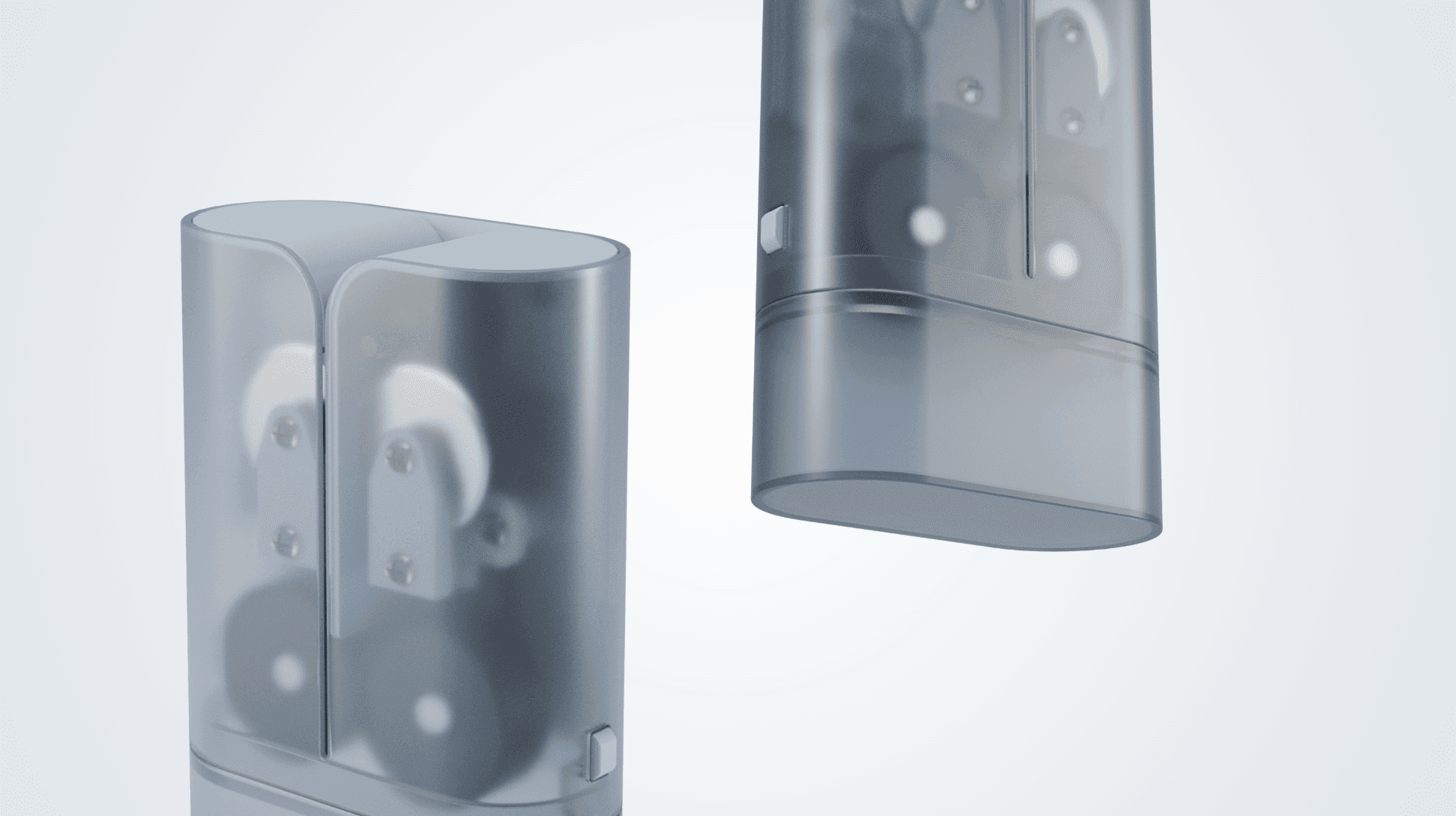
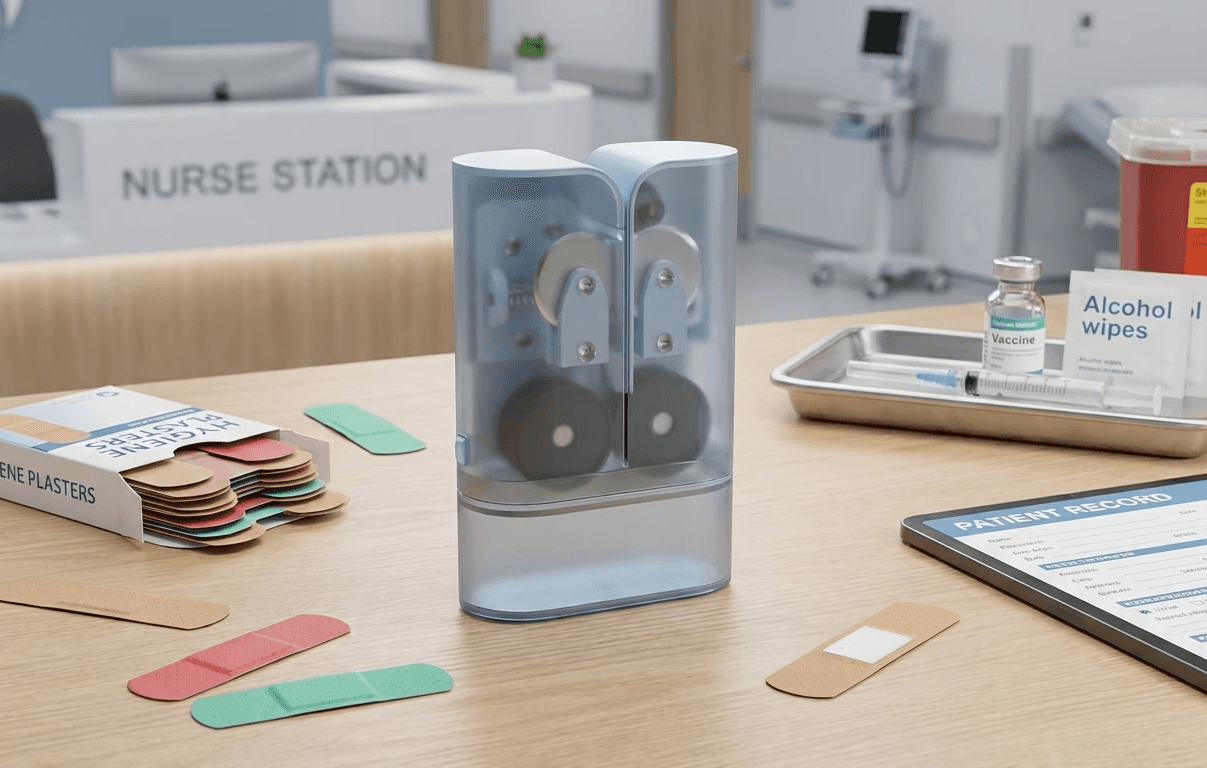
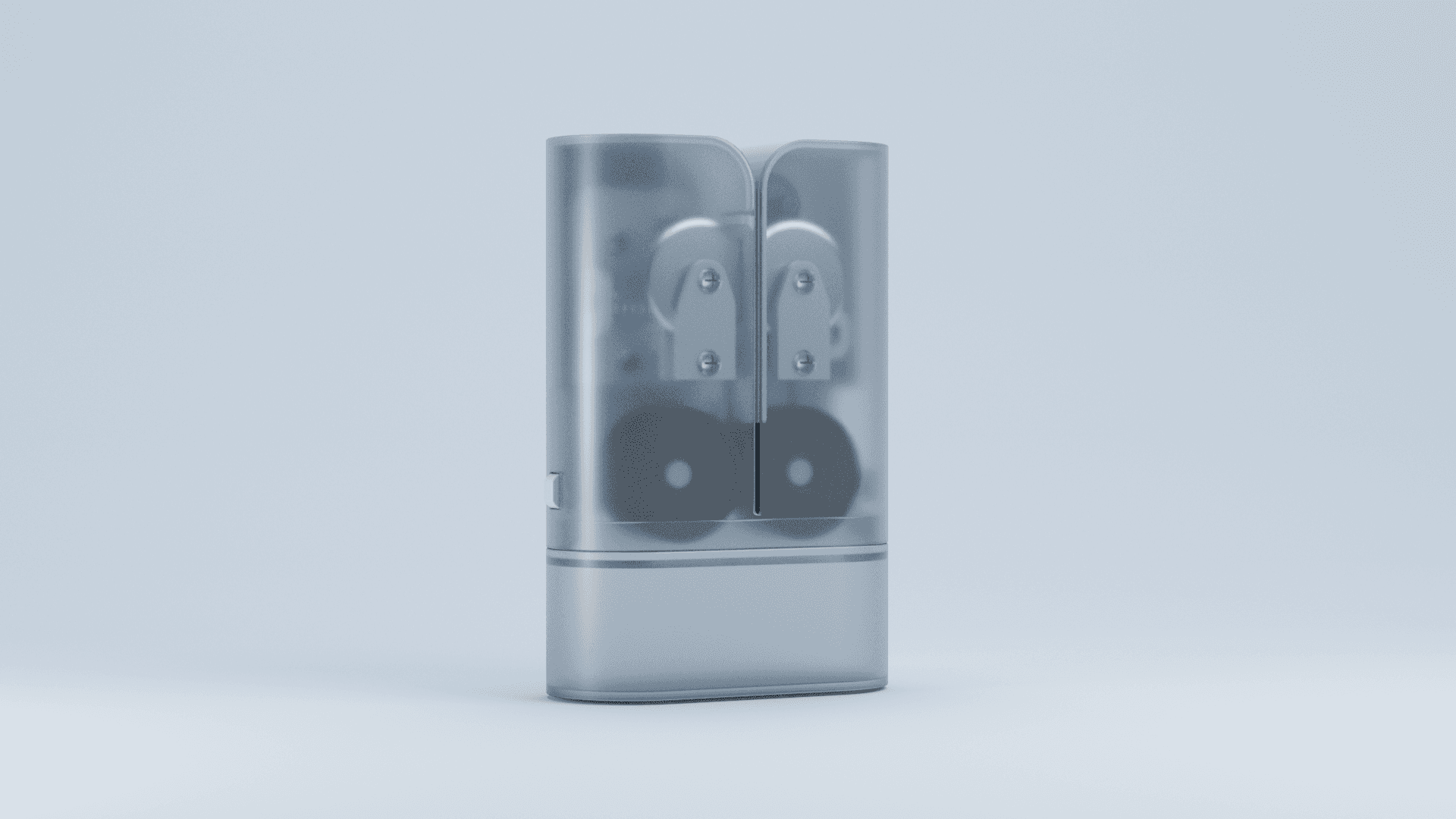
Cut-N-Cure is a mechanical dispensing system designed to automatically remove external packaging and present a standard-sized bandage for immediate application. The device streamlines the "prep-to-apply" workflow, enabling seamless, one-handed operation.
Context

High Patient Flow
Nurses conduct patient visits and administer dozens of vaccines per day
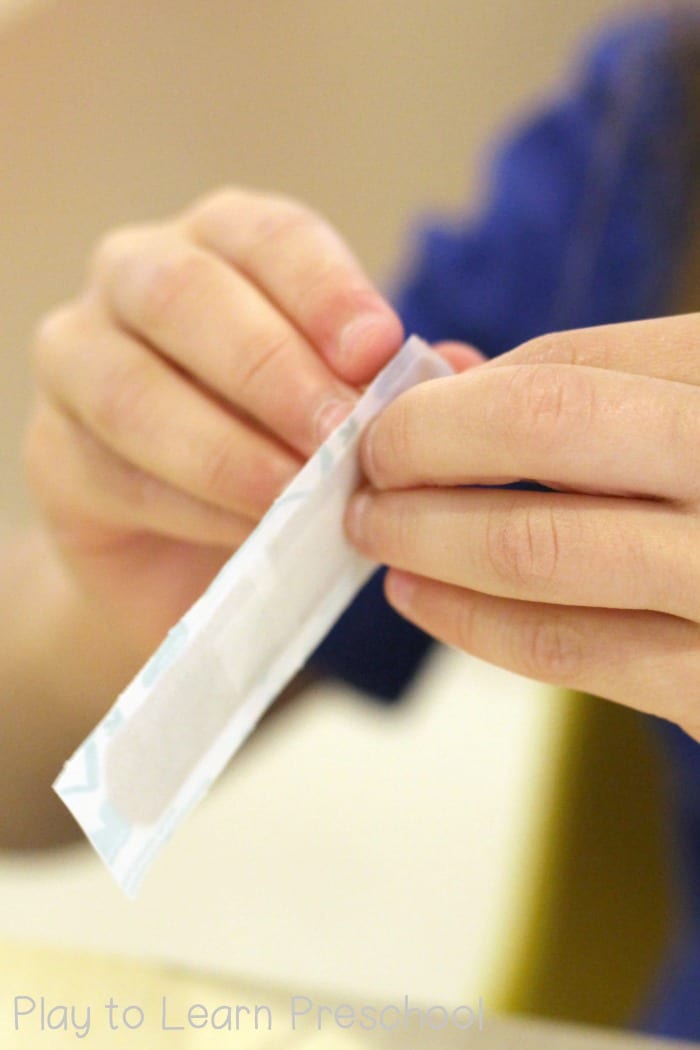
Inefficient Packaging
For efficiency, many nurses stick open band-aids to their glove or their tray
Unsterile → risk of infection
Research

Multiple site visits were coordinated to Rochester Regional Health stations located on and off campus to get a better feel of the vaccination environments we were designing for. We noticed that spaces were often cramped, high activity, and required constant sanitation.
One of the issues that has been annoying to vaccinators and nurses in busy vaccine clinics is the opening experience of individual Band-Aid packages. More specifically, the paper tears and it is difficult to get the Band-Aid out especially when wearing gloves.
Key Findings
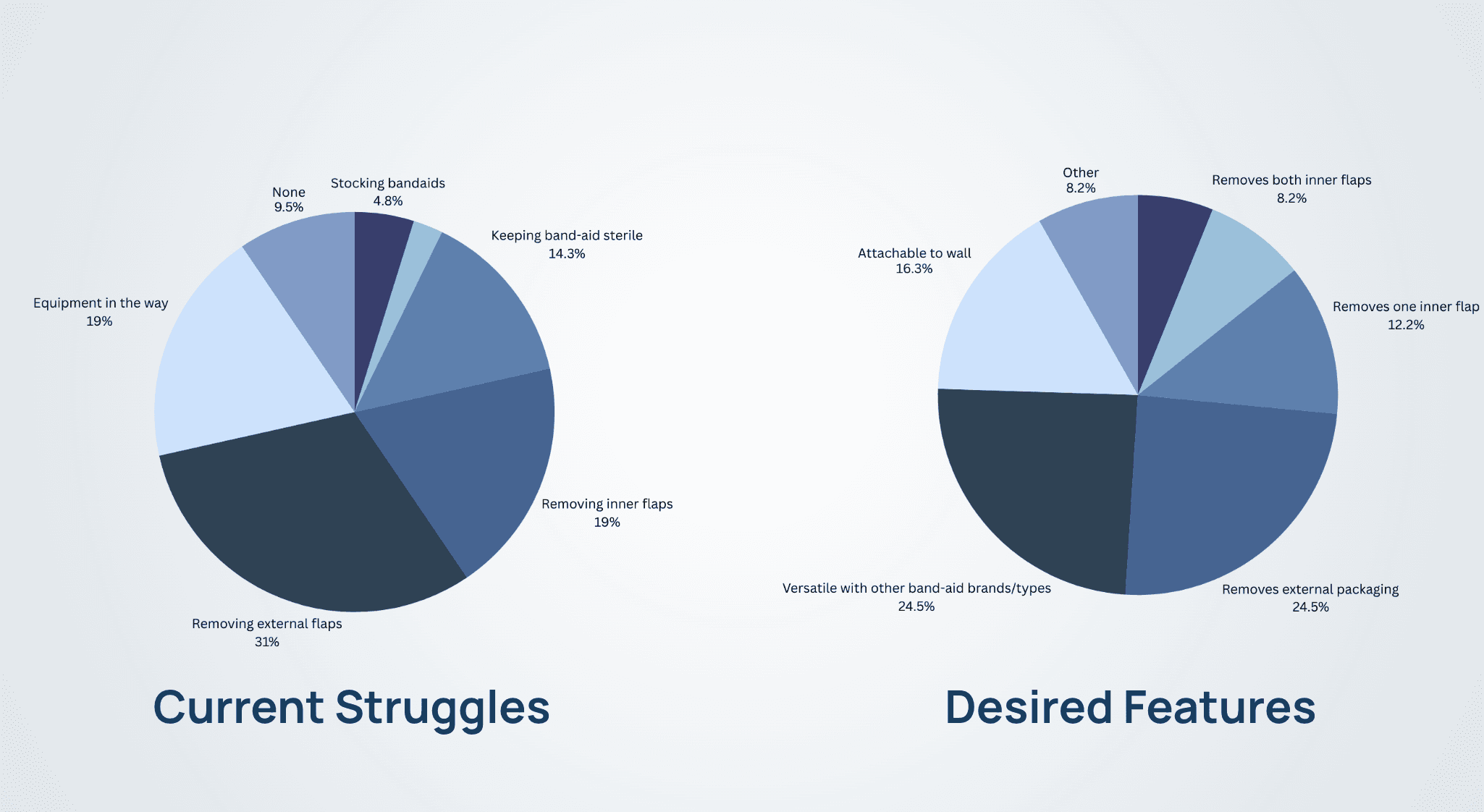
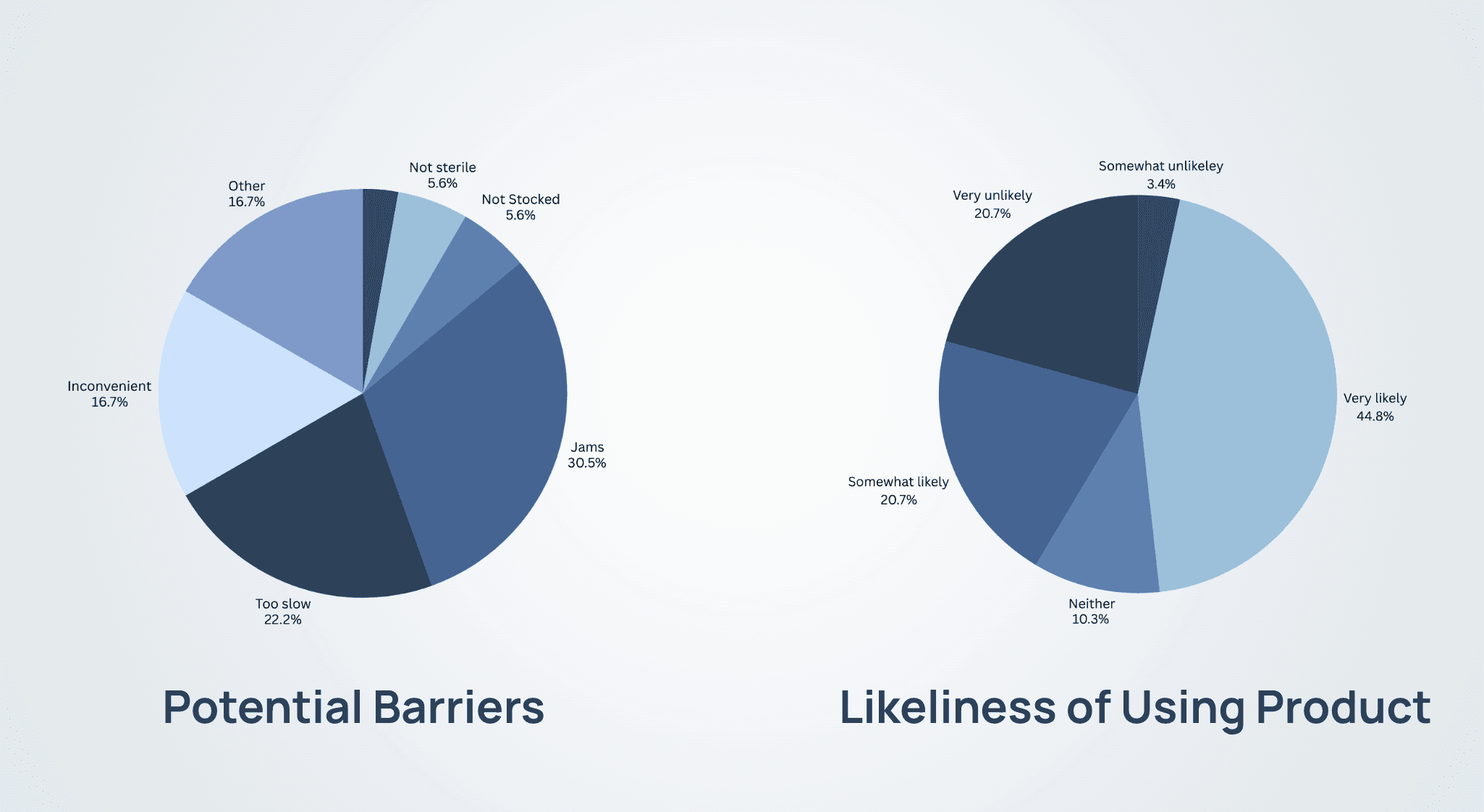
Data across 50+ LPNs, RNs, Medical Assistants was gathered to determine how an assistive device may help with their current work flow. Majority of individuals found utility to having an assistive device help them open band-aids during vaccination. However, some cautions individuals held related to inconsistencies of this potential device slowing down the process. These findings are summarized below.
“If it takes 10 seconds to open, and we are vaccinating 1800 people a day, that’s 300 minutes, or five hours of band-aid opening per day.”
- Liz Casseday, Children's Hospital Assistant Unit Director
Design Goals
With the insights above, our team continued on to spectate the design of an assistive device what would satisfy the following categories.
Accessible
Limited dexterity required - for nurses wearing rubber gloves, one-handed uses
Efficient
Faster and easier than other opening methods
Sanitary
Easily cleanable with alcohol wipes or similar hospital-grade cleaning products
Adjustable
Accommodates different band-aid sizes and shapes
Modular
Inner parts can be replaced if damaged.
Portable
Small enough to be brought from room to room
Problem
How can we design a device that dispenses standard-sized bandages and aids users in removing external packaging?
Applying a standard bandage is a two-handed task often performed by people who (due to injury, age, or clinical workload) only have one hand available or limited fine motor control. Current packaging requires precise pinching and peeling, which creates significant barriers for:
Clinicians: Losing valuable seconds and compromising sterility during high-volume shifts (e.g., post-vaccination).
Patients: Individuals with arthritis or motor impairments who face a loss of independence when managing basic self-care.
The result is a workflow that is slow, frustrating, and prone to contamination.
Identifying Subsystems
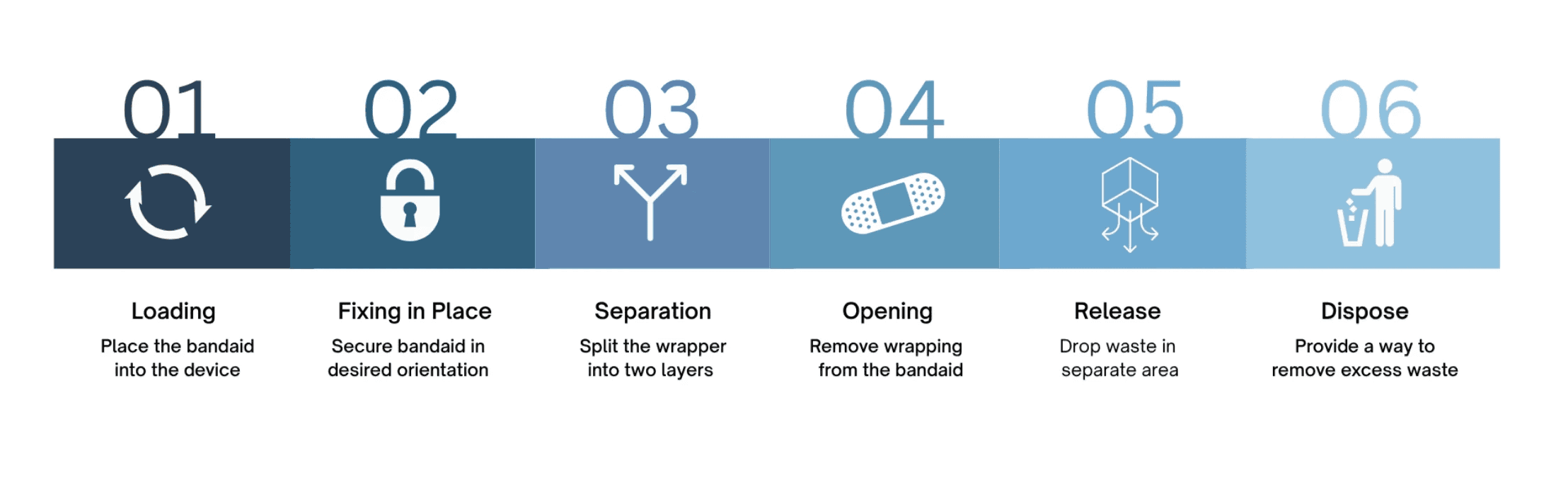
By breaking down the process of opening a bandaid, we were able to identify key steps in the process. These actions are noted below.
Opening Mechanisms
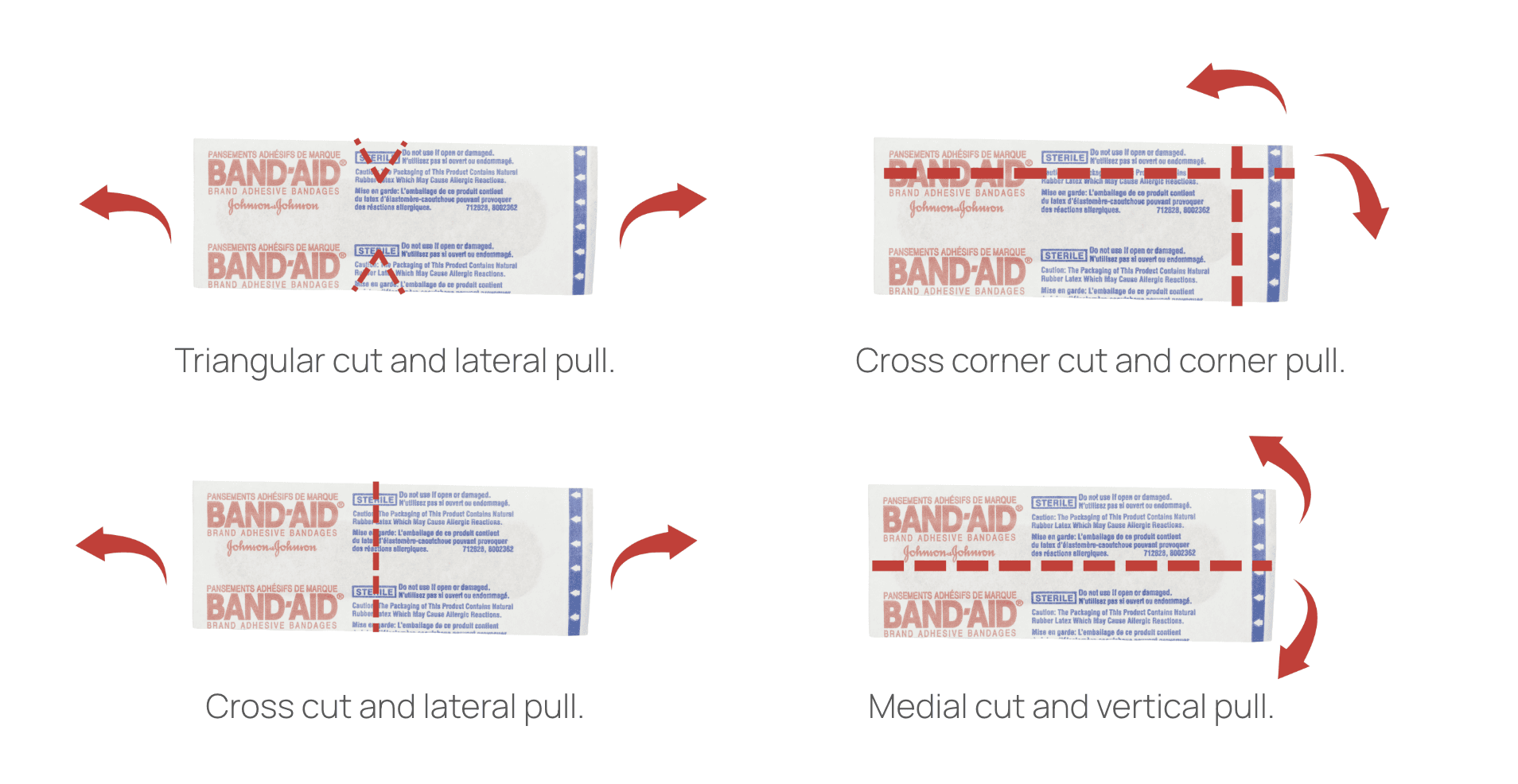
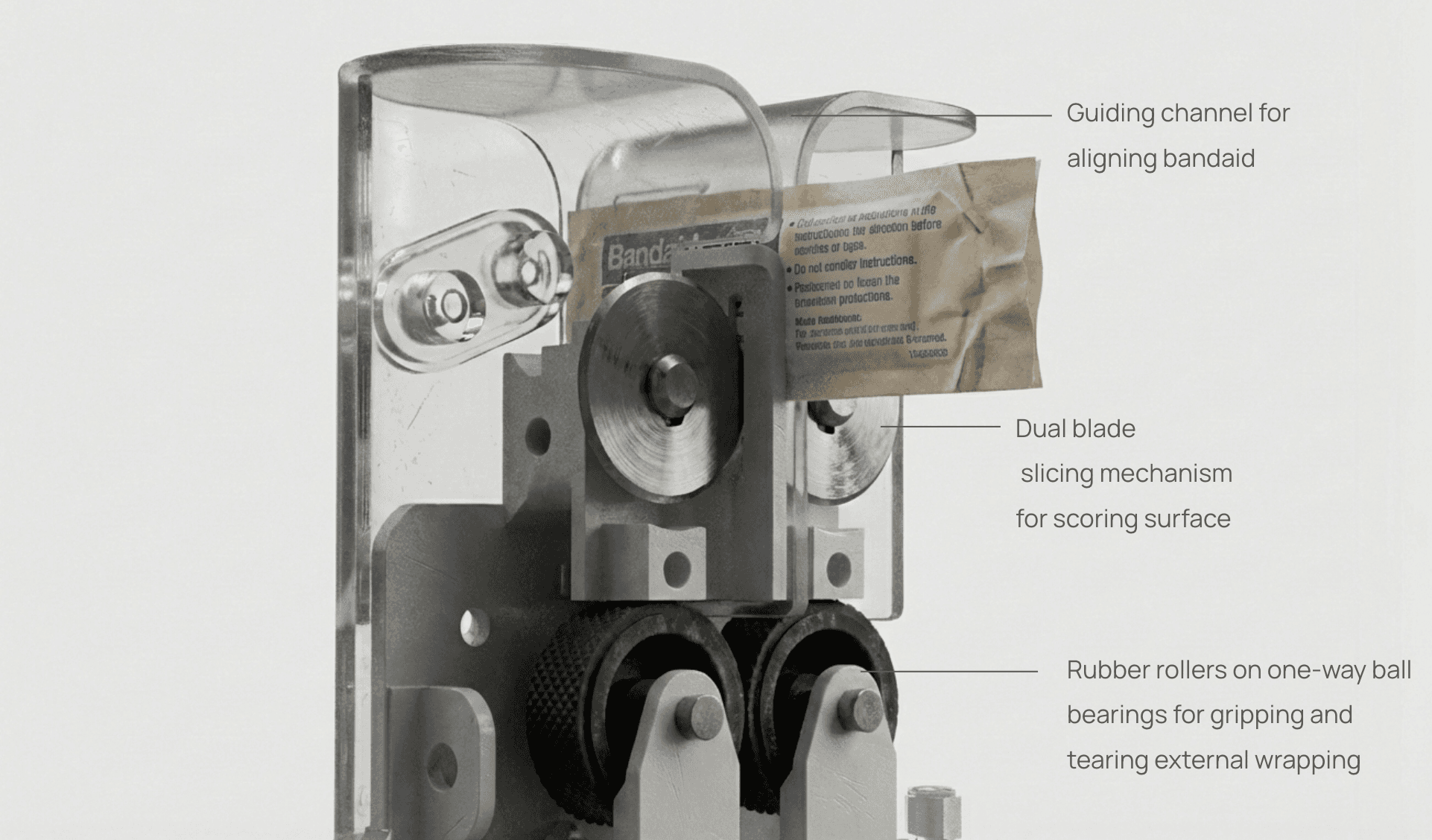
A combination of cutting the packaging through surface scoring in the outer wrapper worked as we tested multiple mechanisms. Friction on the outer edge of the paper, once loosened, would help remove the cover after the cuts were made. We decided to incorporate these mechanisms into our initial prototypes for testing of this concept.
Ideation
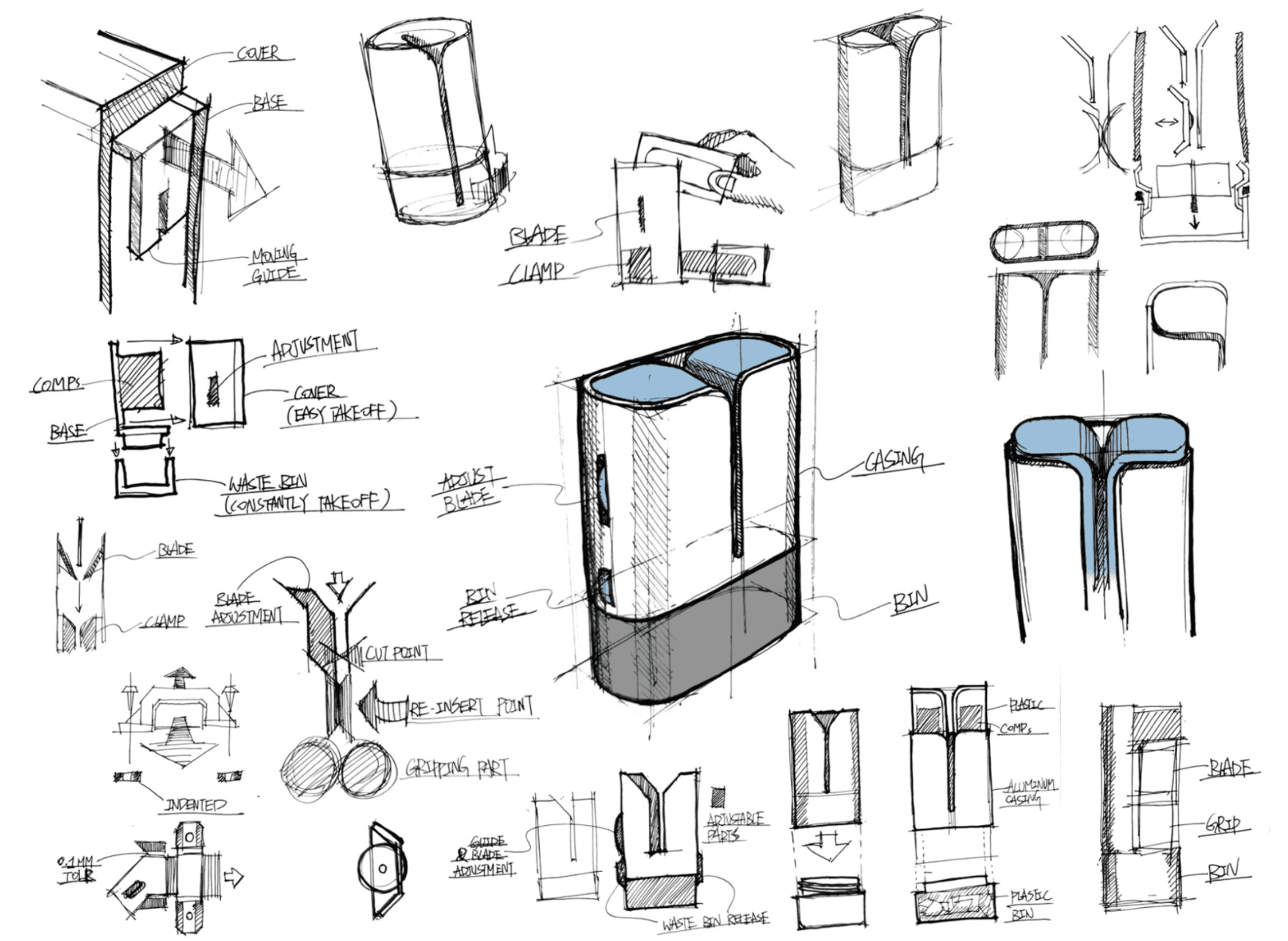
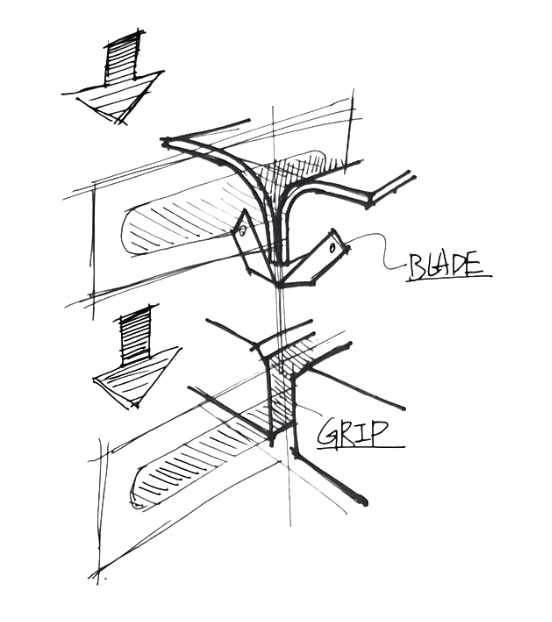
Initial concept sketches for prototype with internal and external components. The combined scoring and grip mechanism is shown below to explain the path of the bandaid as it enters the device.
Prototype Development
Iteration 1
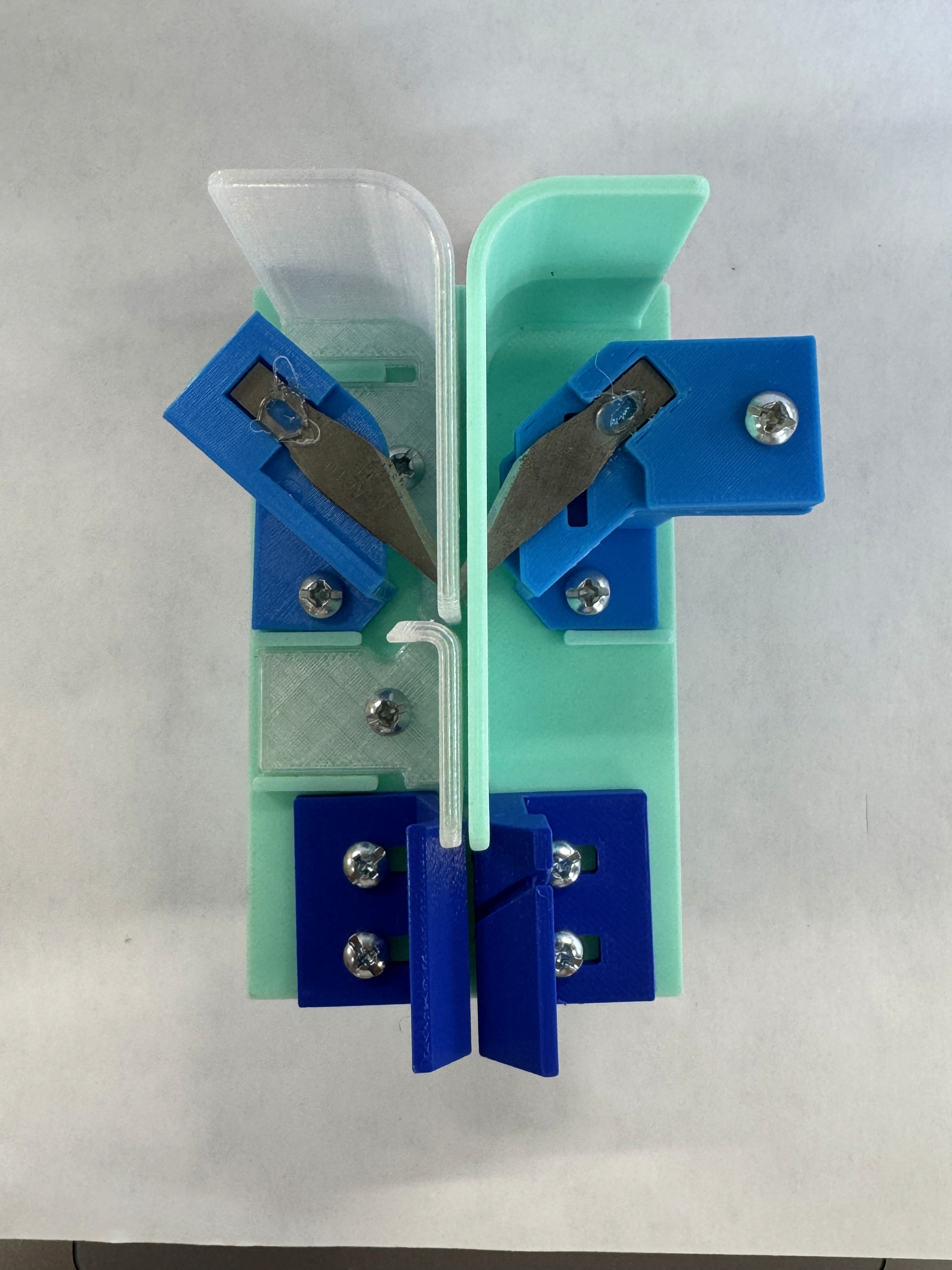
Uses an X-ACTO blade to score the outer wrapper of the band-aid and has a taper at the bottom to snag the wrap.
(+) Scoring mechanism effective and modular components easy for testing
(-) Inconsistent and frequent jams at the top
Demonstration of cutting mechanism with X-ACTO blades.
Iteration 2
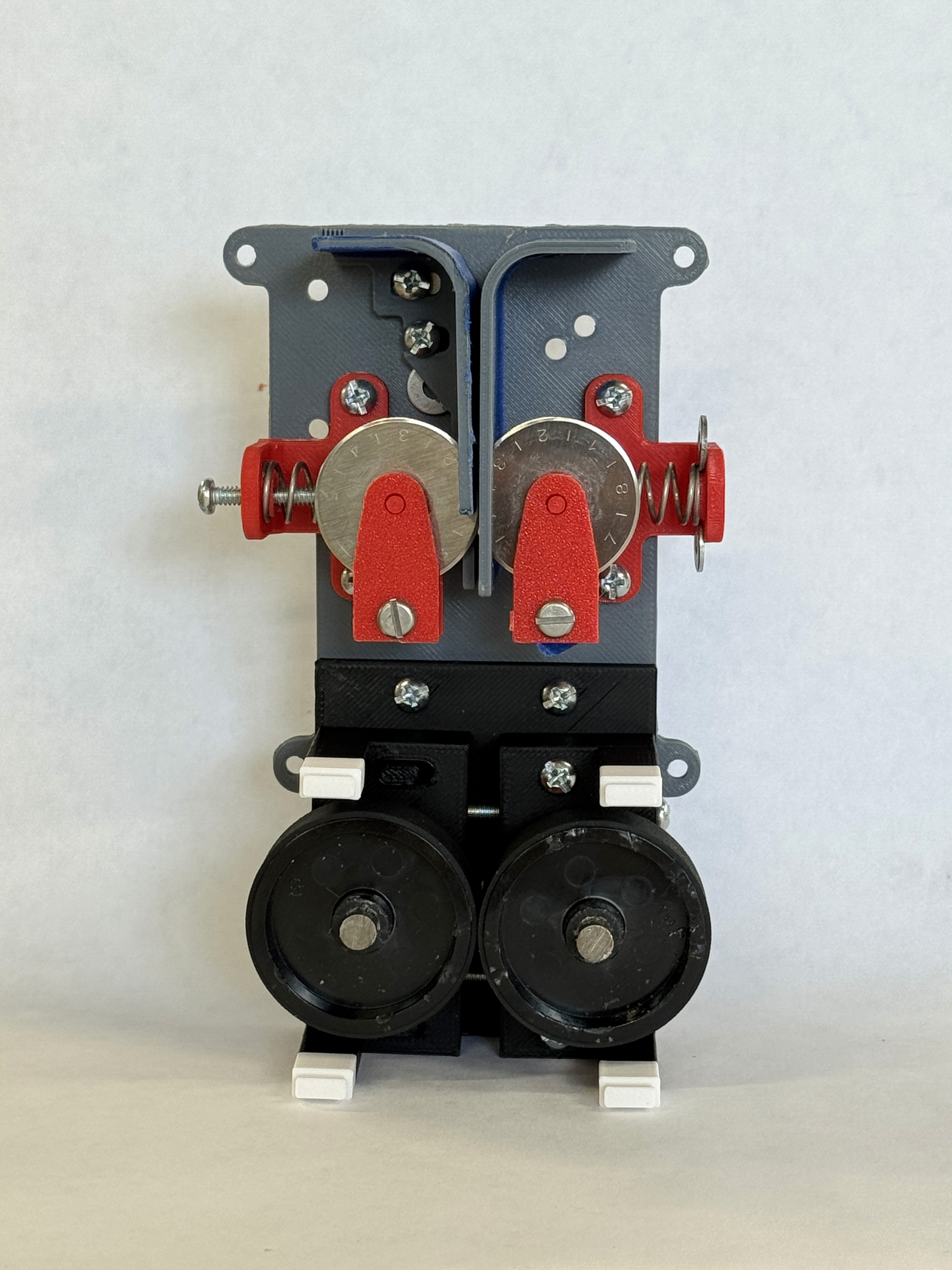
Uses a circular rotary blade to score and has one-way rubber gears to snag the wrap.
(+) Smoother pull and more consistent cut and pull. Tolerance between blades easy to adjust.
(-) Blades dull overtime. Wrap remains stuck in rubber wheels.
Demonstration of cutting mechanism with circular blades and snag mechanism with rubber wheels.
Product Details
Outcomes + Impact
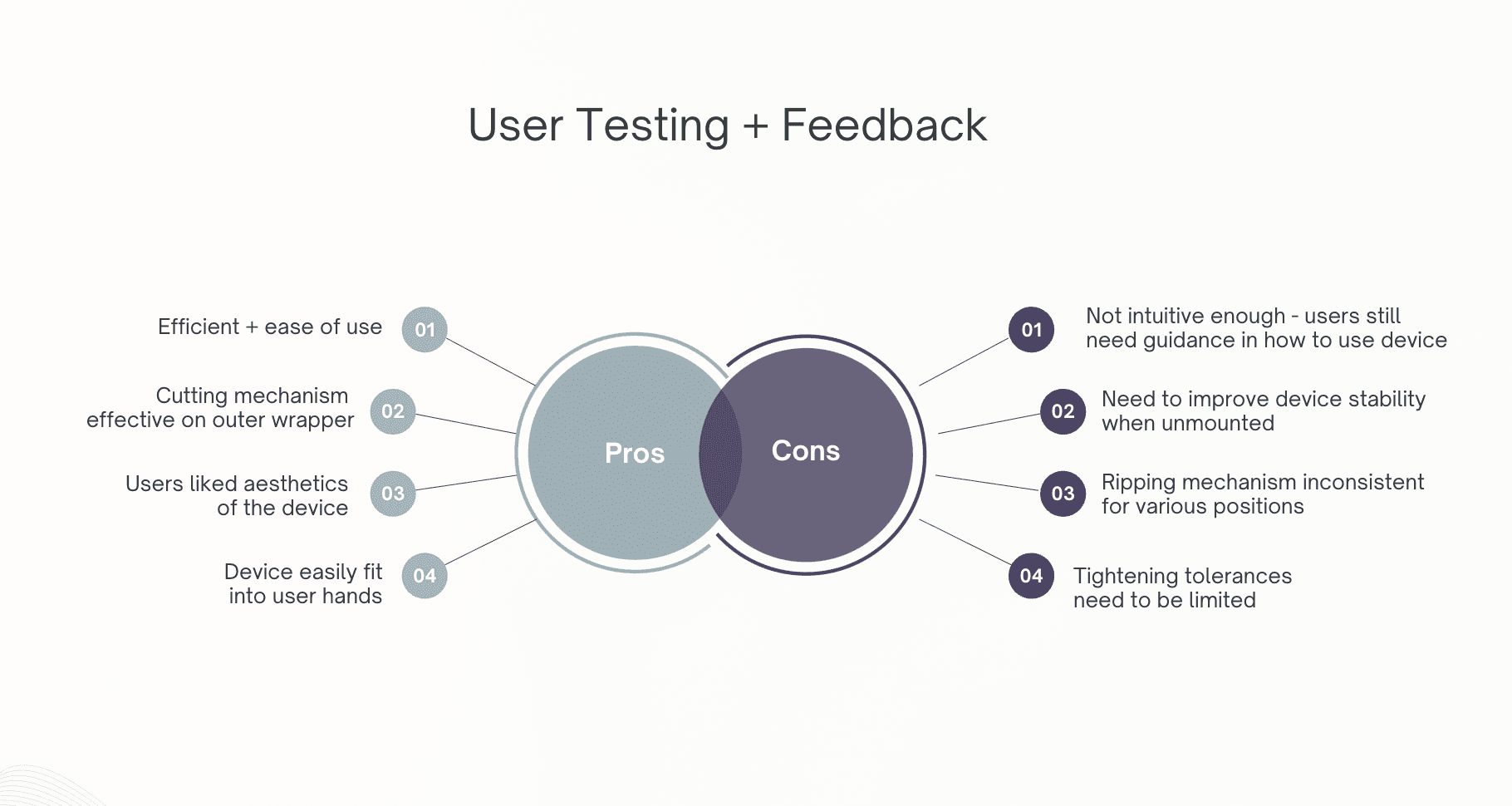
The device was tested with 20+ users which were blindly asked to use the device for the first time. When handed the band-aid, individuals would slide the band-aid into downwards into the slot and the cut would be made. However, variety occurred when removing the wrapping as some would snag the wrap correctly with the wheels while others needed guidance on where to pull. For future iterations, we will aim to improve on these affordances.
Outcome
After 500+ rounds of testing we were able to reduce the 10 seconds work flow to an efficient 4.5 seconds.
This saves:
5.5 seconds per patient
30 minutes per day
112 hours per year
Given that Rochester Regional Health has roughly 15 vaccination sites which treat 325 people each day, we would be able to vaccinate 738 extra people in a single clinic each year.
Conclusion
My time developing accessible technology for Rochester Regional Health alongside my team at Studio930 was an overall great experience. Over these 10 weeks I gained a better understanding of user testing in context settings and high-fidelity prototype development.
As designers, the interactions we initially set out to design may not always be clear. I found it challenging and exciting to find forms which communicate their purpose clearly through affordances. Forms which are not only aesthetic, but functional.
Huge shout-out to my team Sam Wang, Emily Willow, and Liam Brown. We found 100+ ways to open band-aids and left with one.